
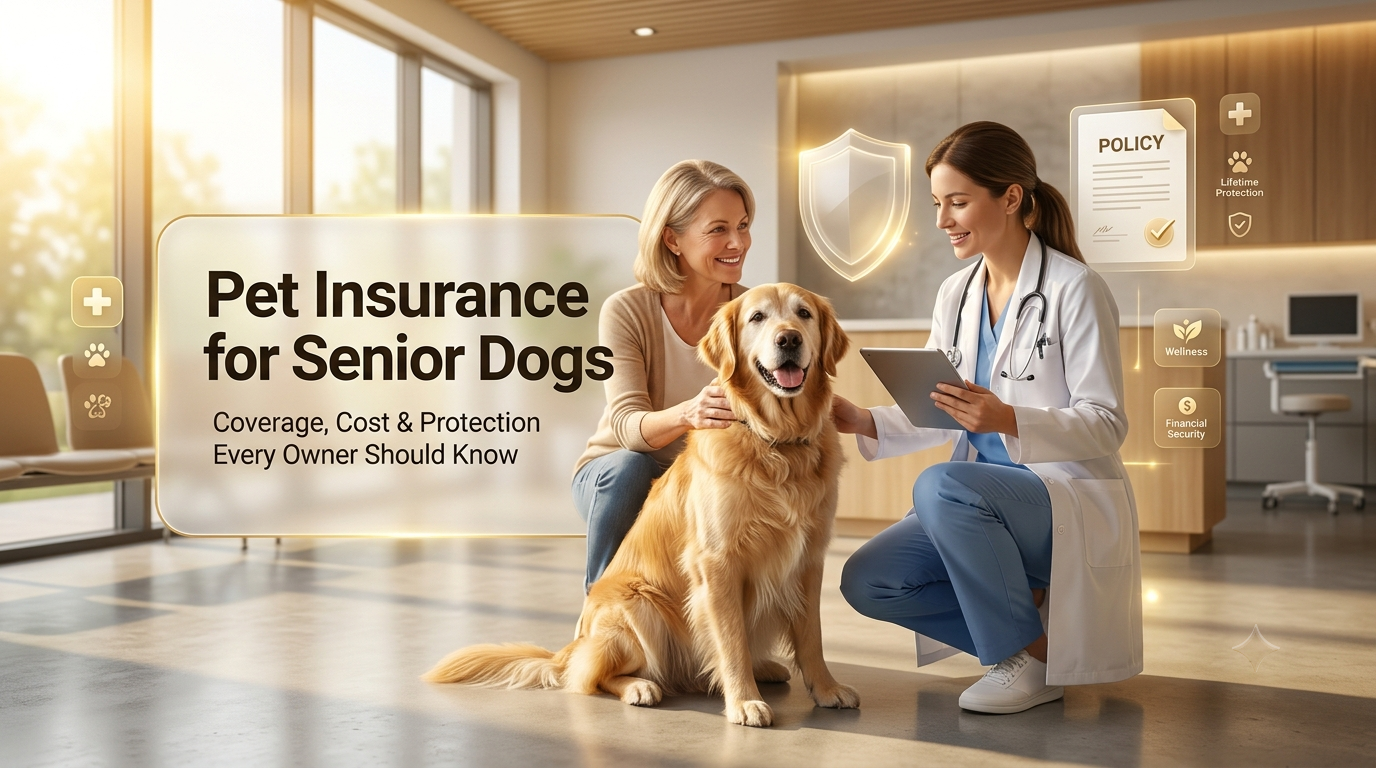
There's a particular kind of worry that shows up once a dog starts graying around the muzzle. The energy is a little lower, the naps are a little longer, and a vet visit that used to be routine starts feeling like it could go a dozen different directions. That shift is exactly when pet insurance for older dogs becomes less of a nice-to-have and more of a genuine financial safety net, right as it also becomes harder and more expensive to secure.
This guide covers the full picture: how coverage needs change from puppyhood through the senior years, what to actually expect from pet insurance for older dogs, where affordable dog insurance still exists at this stage, and a piece many owners forget entirely — how renters insurance with dog bites coverage fits into protecting both your dog and your finances as your pet ages.
Every dog insurance journey technically starts at the same point: a clean slate. Puppy insurance is, in many ways, the easiest and cheapest version of coverage you'll ever buy for a given dog, simply because there's been no time for anything to go wrong yet. No condition has had the chance to develop, so almost nothing gets flagged as pre-existing, and premiums are typically at their lowest point in the dog's lifetime.
As that puppy grows into an adult, premiums creep upward gradually, tracking the general increase in illness risk that comes with age. Nothing dramatic happens here for most dogs. But the real shift arrives once a dog crosses into what insurers classify as its senior years, a threshold that varies by breed and provider but often lands somewhere between six and ten years old, with larger breeds typically crossing that line earlier than small ones.
Owners who bought coverage back when their dog was a puppy usually sail through this transition without much disruption, since their policy simply continues, premiums included. Owners who waited are the ones who run into trouble, because now they're trying to buy pet insurance for older dogs from scratch, often after a condition or two has already shown up in the dog's medical history.
Insurers aren't being difficult for the sake of it when they treat senior applications differently. A ten-year-old dog is, statistically, far more likely to develop a costly condition within the next year than a two-year-old dog, and pricing has to reflect that reality or the insurer simply couldn't stay in business.
A few things change specifically once you're shopping for an older dog:
None of this means coverage isn't worth pursuing. It means the shopping process for an older dog requires more patience and more direct comparison between insurers, since the gap between a strong policy and a weak one widens considerably at this life stage.
Provider-specific details change often enough that it's worth checking current terms directly, but a few general patterns are worth knowing when researching options like Lemonade dog insurance for a senior dog. Lemonade, along with a number of other insurers, sells accident-and-illness coverage with a customizable deductible, reimbursement percentage, and annual payout limit, along with optional wellness add-ons for routine care.
Enrollment for Lemonade dog insurance is generally open starting at a few months old, with an upper age limit commonly cited around fourteen years old for new policies. That upper limit matters if you're shopping late in your dog's life, since missing that window with one insurer means moving on to the next and comparing their specific cutoff instead.
The broader lesson applies beyond any single company name: when you're comparing pet insurance for older dogs, the enrollment age cap and the pre-existing condition policy matter just as much as the monthly premium, and sometimes more, since a cheap policy that won't actually accept your dog is worth nothing at all.
Affordable dog insurance doesn't disappear once a dog hits its senior years, but the definition of "affordable" shifts. You're less likely to find a rock-bottom premium with generous reimbursement, and more likely to be choosing between a few reasonable trade-offs.
A higher annual deductible lowers your monthly premium noticeably. This works well if you have some savings set aside for the first chunk of a vet bill and mainly want protection against a truly large expense.
Dropping from 90% to 70% reimbursement reduces your monthly cost, though it also means covering a bigger share of any claim yourself.
If your primary worry is an emergency injury rather than a chronic illness, accident-only coverage is typically the cheapest form of dog insurance plans available, though it leaves illness-related costs, which become more common with age, entirely uncovered.
Cheap dog insurance that comes with a low annual payout cap can end up costing more in the long run than a slightly pricier plan with a higher cap, particularly for a senior dog more likely to need an expensive procedure.
The honest takeaway is that cheap dog insurance for a senior dog usually means smart trade-offs rather than finding some hidden bargain plan that offers everything for nothing. Knowing which trade-off matters most for your specific dog is what makes the difference.
Health-focused dog insurance plans protect your dog's body. They don't protect you from the financial fallout if your dog injures someone else, which is a real and often underestimated risk, especially as dogs age. Pain, disorientation, hearing loss, and vision decline can all make an otherwise gentle senior dog more prone to snapping unexpectedly, particularly if startled or handled near a sore joint.
This is where renters insurance with dog bites coverage becomes relevant. Most standard renters policies include a personal liability section that can cover medical costs, legal defense, and settlements if your dog bites someone outside your household. Reported figures on dog bite liability claims have put the average cost in the tens of thousands of dollars, with severe cases running considerably higher, which makes this a far bigger financial exposure than many renters realize.
That said, renters insurance cover dog bites protection isn't automatic or universal. A few important caveats apply:
For senior dog owners specifically, it's worth calling your renters or homeowners insurer directly and asking two things: whether your dog's breed is covered, and whether age-related behavior changes could affect that coverage. Getting written confirmation avoids an unpleasant surprise if you ever need to file a claim.
Health coverage and liability coverage solve two different problems, and a thorough approach to protecting an older dog usually involves both. A reasonably complete setup looks like this:
Caring for a senior dog comes with a specific kind of financial exposure that catches a lot of owners off guard, not because they didn't care enough to plan ahead, but because pet insurance and liability coverage tend to get treated as separate, unrelated topics. They're not. A dog that needs more frequent vet visits as it ages is often the same dog whose behavior might shift unpredictably if it's uncomfortable or in pain. Whether you're comparing pet insurance for older dogs, weighing Lemonade dog insurance against a competitor, hunting for affordable dog insurance that still offers real protection, or simply confirming that your renters policy actually covers dog bites, the goal is the same: making sure a bad day for your dog doesn't turn into a financial crisis for you.