
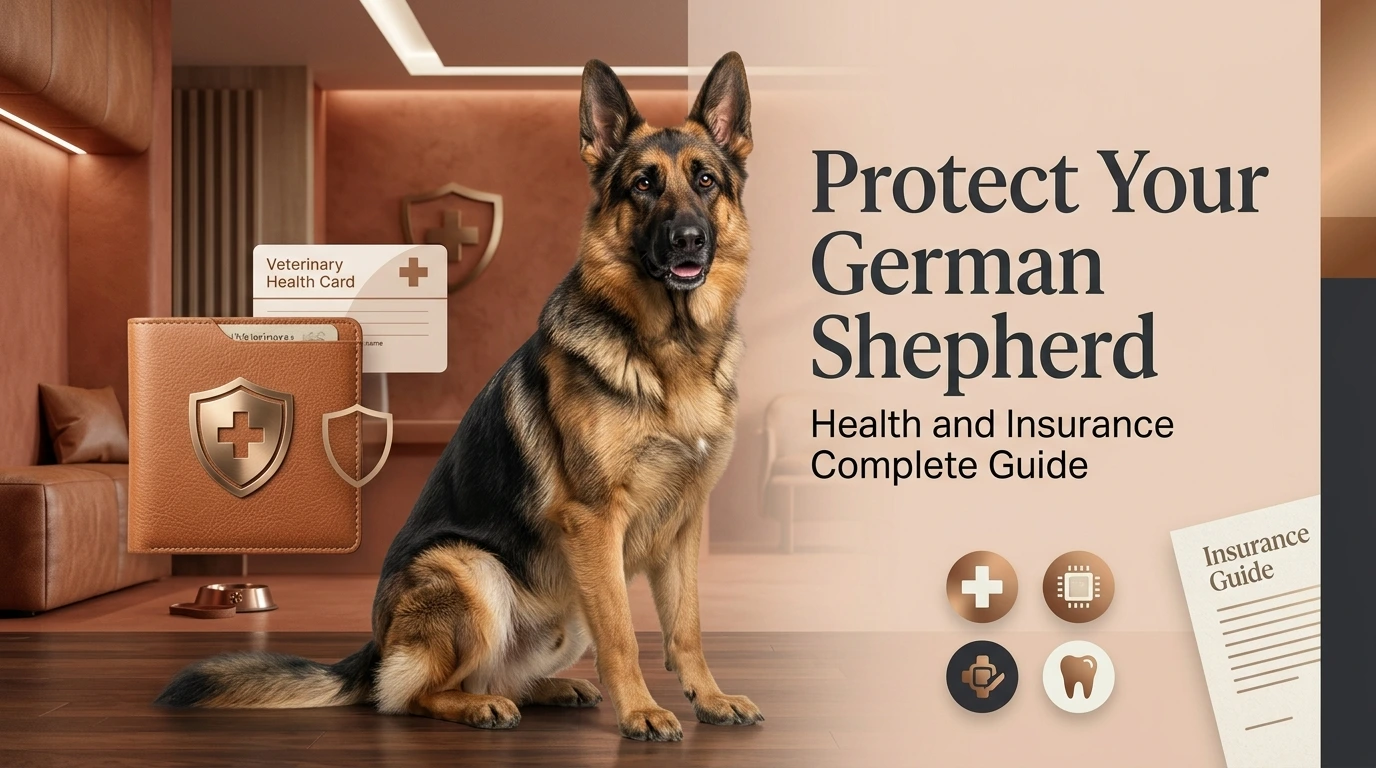
German Shepherds are loyal, intelligent, and famously hardy-looking — which is exactly why so many owners are caught off guard the first time a vet bill for hip dysplasia or bloat surgery lands on the counter. Behind that muscular frame sits a breed with a well-documented list of hereditary conditions, and that combination of size, activity level, and genetic predisposition makes German Shepherd insurance less of a nice-to-have and more of a practical necessity.
This guide walks through what makes this breed different from an insurance standpoint, what a solid policy should actually cover, and how to compare providers without getting lost in marketing language.
Insurance pricing isn't arbitrary — providers set premiums based on claims data, and German Shepherds show up disproportionately in claims tied to orthopedic and digestive conditions. Understanding why helps explain both the cost of coverage and what to prioritize when comparing plans.
Hip and elbow dysplasia. Among the most commonly diagnosed orthopedic conditions in the breed, often requiring imaging, medication, and in more serious cases, surgery.
Degenerative myelopathy. A progressive spinal cord condition that German Shepherds are genetically predisposed to, with no cure but manageable supportive care.
Bloat (gastric dilatation-volvulus). A life-threatening emergency more common in large, deep-chested breeds, requiring immediate surgical intervention.
Exocrine pancreatic insufficiency. A digestive disorder that shows up more frequently in this breed than in the general dog population.
Allergies and skin conditions. Chronic issues that can mean recurring vet visits and long-term medication costs.
None of this means every German Shepherd will develop these conditions — many live long, healthy lives without a single major claim. But insurers price policies around probability, not certainty, which is why breed-specific research matters before you commit to a plan.
Not all pet insurance is built the same way, and the gap between a mediocre policy and a genuinely useful one usually shows up exactly when you need it most — mid-claim, reading exclusions you didn't notice at signup. A policy worth having for this breed should reasonably include the following.
Accident and illness coverage. This is the baseline. It should cover injuries from accidents as well as illnesses that develop over time, not just emergency incidents. Given how many German Shepherd health issues are progressive rather than sudden, illness coverage matters just as much as accident coverage.
Hereditary and congenital condition coverage. This is the detail most owners skip past during signup and regret later. Because hip dysplasia and degenerative myelopathy are hereditary in this breed, confirm explicitly that hereditary conditions are covered, not excluded as a blanket category — some budget plans quietly carve these out.
Diagnostic imaging and specialist referrals. Orthopedic issues typically require X-rays, sometimes CT or MRI scans, and referral to an orthopedic specialist. Confirm these are included rather than capped at a token reimbursement amount that barely covers a fraction of the actual cost.
Chronic condition management. Because several of the conditions common to this breed are lifelong rather than one-off, check whether the policy continues covering a condition year after year, or whether it treats a chronic diagnosis as a pre-existing condition at renewal — a practice that can leave you paying out of pocket for something you were previously covered for.
Emergency and surgical coverage. Given the bloat risk specifically, confirm the policy covers emergency overnight hospitalization and surgery without an unreasonably low annual cap, since a single bloat surgery and recovery stay can run into the thousands.
When narrowing down the best pet insurance for German Shepherds, the marketing pages tend to look similar across providers — unlimited coverage, fast claims, no hassle. The real differences show up in the fine print. Focus your comparison on these specific factors rather than headline premiums alone.
A useful exercise before signing anything: run your dog's age, location, and desired coverage level through a pet insurance calculator to see how premiums shift across coverage tiers. Seeing the actual numbers side by side, rather than relying on a provider's own comparison chart, tends to surface differences that marketing pages gloss over.
Even though German Shepherd owners have breed-specific concerns to weigh, most of the fundamentals of choosing the best pet insurance for dogs overall still apply here. A strong general policy framework, adapted for breed risk, usually beats a niche breed-marketed plan with weaker underlying coverage.
It might seem like a stretch to connect dog food to insurance premiums, but preventive health genuinely factors into long-term claims history for many providers, and diet is one of the few variables an owner fully controls. Fresh, portion-controlled diets — the kind offered by services like Sundays dog food — have gained popularity among large-breed owners partly because weight management plays a direct role in reducing joint stress, which matters enormously for a breed already prone to hip and elbow issues.
This isn't a guarantee that better nutrition prevents every genetic condition — it doesn't, and no insurer will discount your premium for switching food brands. But maintaining a lean body condition score is one of the most consistently cited factors in veterinary literature for reducing the severity and onset age of joint-related conditions in large breeds. Pairing solid nutrition with solid insurance coverage is less about either one alone and more about stacking the odds in your dog's favor from both directions — one reducing the likelihood of certain claims, the other protecting you financially when claims happen anyway.
German Shepherd premiums typically sit above the average for mixed-breed dogs of similar size, reflecting the breed's claims history. Several factors influence where your specific quote lands within that range.
Insurance of almost any kind rewards buyers who compare rather than accept the first quote. The same instinct that leads someone to run numbers through a car insurance calculator before renewing a policy, or to check pricing movement the way investors track gold rates in Qatar or gold rates in Oman before making a purchase decision, applies just as usefully to pet insurance. Markets and premiums shift, providers update their terms, and the plan that looked best a year ago isn't necessarily still the best value today. Building in an annual habit of re-quoting your dog's coverage, even if you don't switch providers, keeps you from quietly overpaying for coverage that's fallen behind the market.
Timing matters more with this breed than with lower-risk breeds, because several of the conditions discussed above typically first show symptoms between one and five years of age. Enrolling as a puppy, ideally before any joint issue has been diagnosed or even suspected, avoids the single biggest pitfall in pet insurance: a hereditary condition being treated as pre-existing because it was flagged, even informally, at a vet visit before coverage began.
If you've adopted an adult German Shepherd, enroll as soon as possible and be transparent about any known health history — insurers can and do request veterinary records during the underwriting process, and inconsistencies discovered later can result in denied claims.
A few warning signs are worth taking seriously when evaluating any provider, not just for this breed specifically:
German Shepherd insurance isn't about finding the cheapest monthly premium — it's about finding a policy that will actually hold up the day you need it, whether that's an emergency bloat surgery or years of managing a chronic joint condition. Take the time to read exclusions carefully, run real numbers through a calculator rather than relying on advertised averages, and enroll early while your dog is still young and healthy. The extra hour spent comparing policies now is small compared to the peace of mind — and the money — it can save later.